

Animatronic motor selection with our expert guide. Learn how to choose between servo, stepper , brush and brushless motors to achieve animatronic models' realism, powerful movement, and silent operation.
Why Motor Choice is the Core of Animatronic Realism?
Before delving into specifications, it's vital to understand the direct link between the motor and realism. The motor doesn't just initiate movement; It infuses the product with its unique personality and characteristics.
1. Smooth vs. Lag:
nature movement is smooth and accelerated. A poorly selected motor creates a lag, animatronic robotic motion that instantly breaks immersive experience.
2. Power vs. Sluggish:
A powerful, precise motion can conveys strength and emotion. An underpowered motor results in sluggish, unconvincing actions.
3. Quite vs. Noisy:
The audible whine of a motor can ruin a immersive scene. For Animal Animatronics in educational settings or parade monsters, vioce management is important.
4. Reliability vs. Failure:
A motor that fails during a live show or a film shoot is a costly disaster. Durability and consistent performance are non-negotiable for professional Film Props And Mechs.
Finally, mastering how to choose a motor is about seamlessly blending engineering precision with artistic vision.
Animatronic Motor Types
Understanding the core technologies is the first step. The following table provides a high-level comparison of the four primary motor types used in advanced animatronics worldwide.
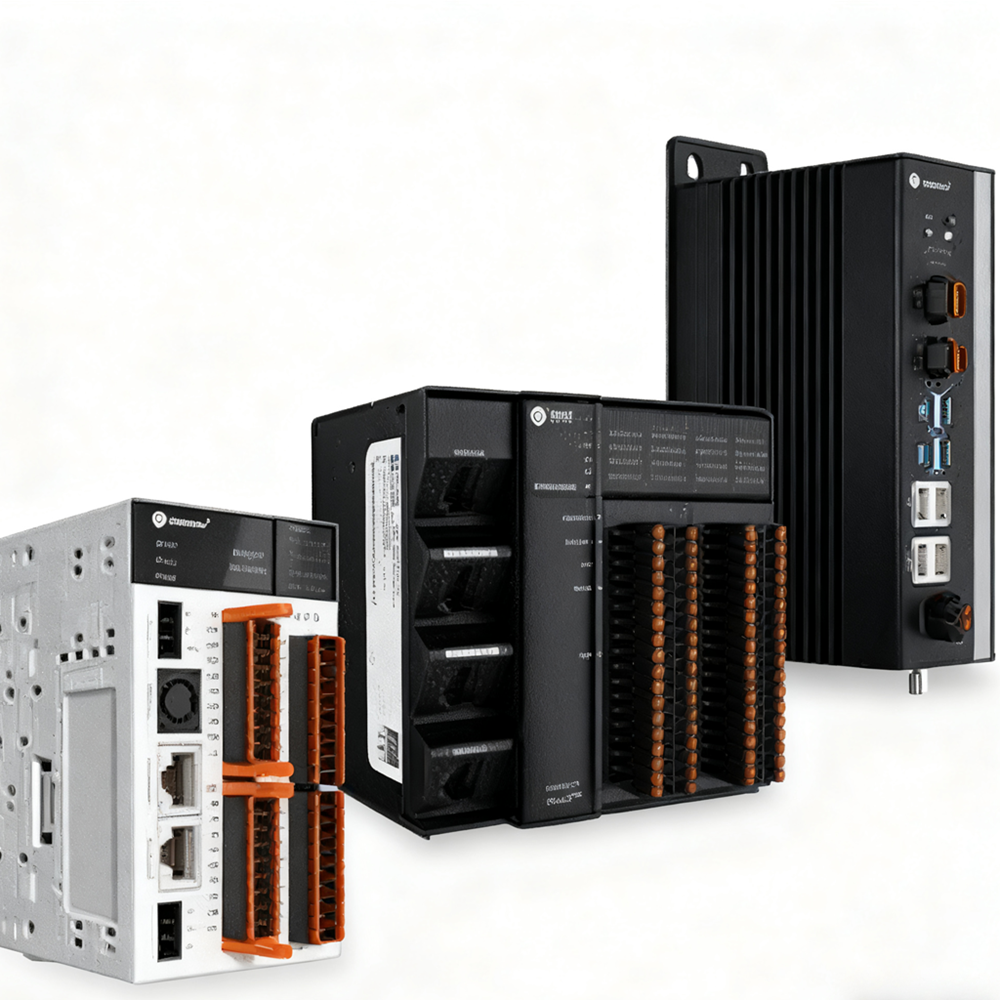
Table 1: Animatronic Motor Comparison at a Glance
| Motor Type | Control Scheme | Best for Realism In | Key Advantage | Primary Limitation |
|---|---|---|---|---|
| Brushed | Speed (Voltage) | Simple rotations | Low cost, easy control | Short lifespan (brush wear), noisy |
| Brushless | Speed & Position (Encoder) | High-speed, reliable movements | Long life, high efficiency, quiet | Complex controller needed, higher initial cost |
| Stepper | Position (Open/Closed Loop) | Precise, slow movements | Excellent low-speed torque, positioning accuracy | Vibrates at certain speeds, can lose steps under load |
| Servo | Position (Closed Loop) | Facial expressions, joints | Extreme precision (0.1°–0.5°), high holding torque | Highest cost per torque, complex integration |
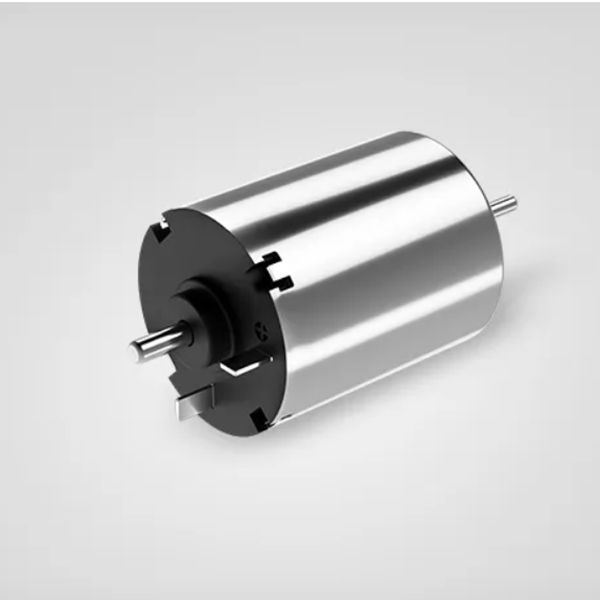
1. Brushed Motors:
Working Principle:
Use physical brushes to deliver current to a rotating commutator.
Advantage:
Simple control (variable voltage), low cost, high initial torque.
Weakness:
Brushes wear out, requiring maintenance; electrically noisy; less efficient.
Suitable For:
Simple, cost-effective applications where use in simulation products with simple movements, small movement ranges, and low requirements for movement quality.
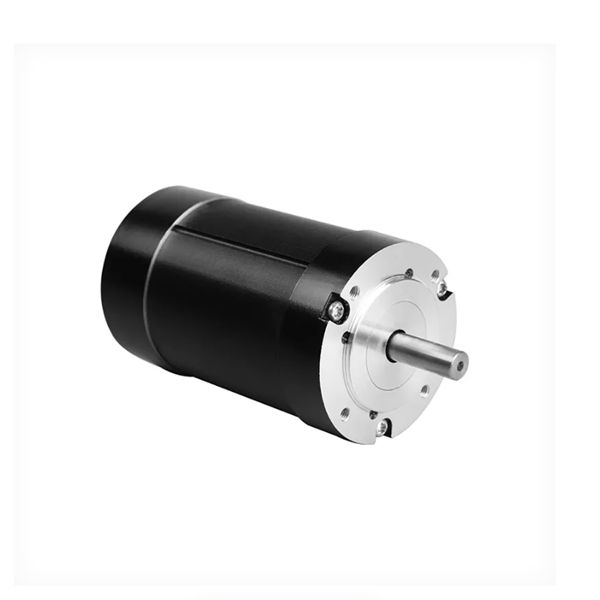
2. Brushless DC Motors:
Working Principle:
An electronic controller (ESC) phases the current, remove physical brushes for smarter operation.
Advantage:
Long lifespan, high efficiency, minimal maintenance, compact size with high power, smooth operation
Weakness:
Requires a more complex controller, generally higher original cost than brushed DC.
Suitable For:
Applications demanding high speed, reliability, and power in a small package. Suitable for certain requirements for movements, but not aiming for perfect results. Suitable for small-scale movements and models with smaller size.
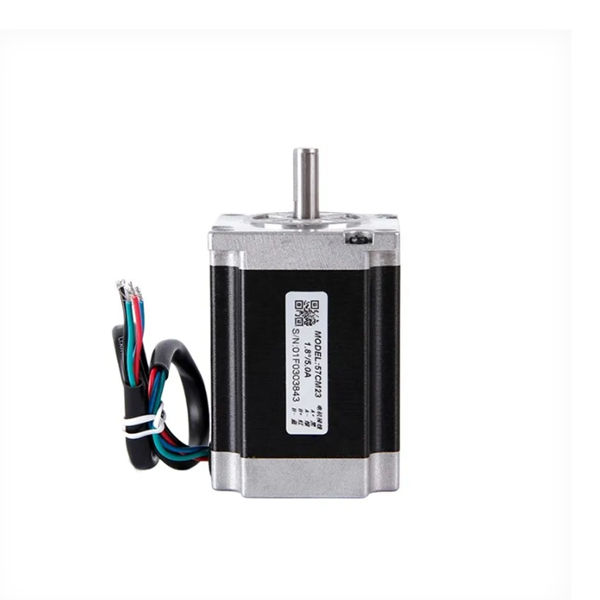
3. Stepper Motors: The Precision Stepper
Working Principle:
Move in discrete "steps" by energizing coils in a sequence, offering accurate open-loop position control.
Advantage:
Positioning accuracy and repeatability without feedback, high holding torque at zero speed, simple control for positioning.
Weakness:
Can shake at certain speeds, torque drops at high speeds, can "lose steps" if overloaded (a critical failure in open-loop mode).
Suitable For:
Slower, precise movements where knowing the position is key without feedback. Excellent for pan-and-tilt camera heads or stop-and-go motions in an Immersive Exhibition display.
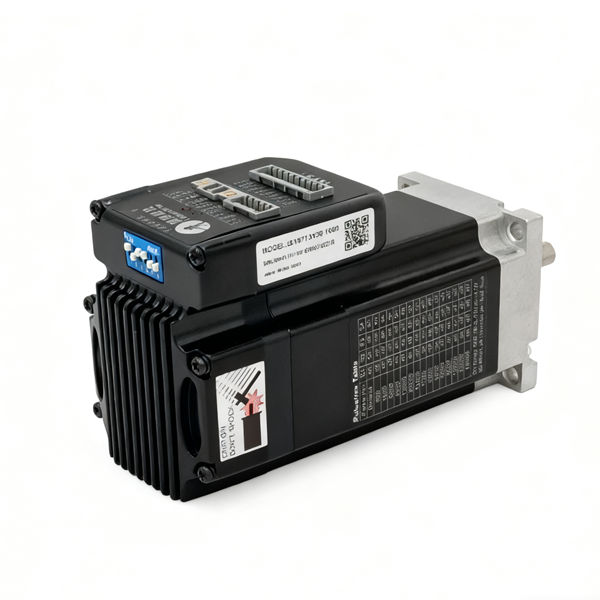
4. Servo Motors: The King of Realism
Working Principle:
A closed-loop system integrating a motor (DC/BLDC), a gearbox, and a positional feedback sensor. The controller constantly corrects the position for absolute accuracy.
Advantage:
Extremely high torque for their size, absolute precision (won't lose position), smooth, powerful, and reliable motion.
weakness:
The most expensive option per unit of torque, more complex to program and integrate.
Suitable For:
High-standard animatronic applications where realism is crucial. This includes facial expressions, intricate finger movements, and any joint—like a Animatronic Dinosaur neck or a Animatronic Monster arm—that requires powerful, smooth, and exactly repeatable motion. This is the gold standard for achieving animatronic models' realism.
Motor Selection Framework: A Step-by-Step Guide
Now, let's translate theory into a practical, actionable workflow for your animatronic motor selection process.
Step 1: Define Your Performance
Start by answering these key questions, considering the end-use environment in North America, South America, Europe, or Asia:
What is the Load?
Precisely calculate the weight and inertia the motor needs to move.
What Speed and Torque are Needed?
Determine the required movement speed and the force needed to achieve it.
What Level of accurate is required?
Does the movement need to be to the exact degree (e.g., an eye glance), or is general movement sufficient?
What is the Duty Cycle?
Will the motor run continuously or in short, intermittent bursts?
Step 2: Match the Motor to the Animatronic's Frame
Facial Expressions & Fine Movements:
Micro servos or small, high-precision steppers.
Mouth, Body, Neck, Arm, and Leg Joints:
High-torque servo motors are indispensable for the powerful, fluid motion required in an Animatronic Dinosaur or complex Animatronic Monsters.
Large, Slow-Sweeping Motions:
Stepper motors can be a cost-effective solution.
High-Speed Auxiliary Movements:
Brushless DC motors are excellent for rapid, repetitive actions like a tail whip or a blinking eyelid.
Partnering with an Expert Manufacturer!
While understanding the theory is improtant, partner with a specialized manufacturer is what separates from professional-grade, reliable attractions. At Star Robot, we provide more than components; we provide one-stop solutions trusted by creators.
Our Product Concept:
Our motors are engineered from the ground up for the demand of animatronics. We focus on:
High Torque Density: Delivering maximum power in the smallest possible package, allowing for more elegant and biomechanically accurate designs.
Sound Optimization:
Designing for whisper-quiet operation to protect the attraction of any Immersive Exhibition.
Strong Construction:
Ensuring our components with stand the rigors of continuous performance, from the humid environments of theme parks to the dry, dusty sets of film productions.
Professional QC
Every motor is a product of precision engineering and strict certification, accord with international standards.
Multi-Stage Quality Control:
Each unit undergoes strict testing for noise, vibration, heat dissipation, and positional accuracy under load. Our testing simulate 48 hours of real-world operation to ensure performance in your most perfect project.
Frequently Asked Questions (FAQ)
Q1: For a project in the US, I need a motor that needs specific safety certifications. Can you supply?
A: Absolutely. We hold and can provide documentation for various international standards, including UL/CE certification for our motor systems. We understand the compliance requirements for public installations and film sets in North America and the EU.
Q2: My animatronic needs to be silent for a museum exhibit. What is the best motor choice?
A: For the quietest operation, high-quality Brushless DC Motors or Servo Motors are your best choice. The lack of physical brushes in BLDC motors and the refined mechanics of high-end servos significantly reduce acoustic noise, which is crucial for educational Animal Animatronics or serene artistic displays.
Q3: We have a unique project for a theme park in the APAC region requiring custom torque and IP-rated protection. Can you help?
A: Customization is a cornerstone of our service. We regularly collaborate with clients to develop customize motor solutions, including custom shaft configurations, specific IP ratings for dust-proof and water-proof.
Q4: How do I prevent my stepper motor from losing position during a long performance?
A: Stepper motors in open-loop mode are always at risk of losing steps due to unexpected resistance. The most reliable solution is to switch to a true servo motor. The built-in encoder in a servo provides constant feedback, eliminating the possibility of positional loss and ensuring your Animatronic Products perform perfectly every single show.
Conclusion
Mastering how to choose a motor is the final, crucial step in transforming your animatronic from a model into a realism. It’s the key to achieving the animatronic models' realism that captivates and amazes audiences.
By understanding the strengths of each motor type and following a structured selection process, You will be able to have a clearer understanding of your product. But you don't have to do it alone. Partner with a manufacturer who understands your artistic vision and possesses the engineering expertise to make it a reliable reality.