

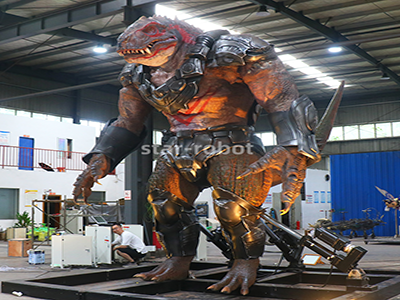
The breathtaking mecha equipment in The Wandering Earth series has not only ignited a global sci-fi frenzy but also showcased the technological leap of China's film industry. What exactly distinguishes these meticulously crafted Most Advanced Animatronics from practical mecha? And how have they transitioned from silver-screen fantasies to real-world applications? Animatronic Film Prop article provides an in-depth analysis.
Evolutionary Journey
Movie Props:
From China's first film Dingjun Mountain (1905) to today's 3D blockbusters, prop-making has undergone revolutionary changes:
- Early Stages: Woodcarving and fabric costumes
- Modern Technology: Food-grade silicone and 3D-printed alloys
- Key Milestone: Wolf Warrior 2 (2017) utilized over 200 digitally enhanced physical props
Mecha Development:
- 1960s: Military prototypes (e.g., General Electric's Hardiman)
- 1980s: Japanese anime boom (e.g., Mobile Suit Gundam)
- 2020s: Practical exoskeletons (e.g., Sarcos Guardian XO)
Structural Comparison
| Feature | Movie Props | Practical Mecha |
| Core Material | Silicone/Latex (for detailing) | Titanium alloy/Carbon fiber composites |
| Weight | 5-20kg (actor-wearable) | 50-500kg (structural load-bearing) |
| Lifespan | 3-6 months (shooting cycle) | 5-10 years (real-world use) |
Applications
Movie Props:
- Action Scenes:Hydraulic systems in Captain America: Civil War (supporting 200kg)
- Special Effects Interaction: Magnetically levitating cloak in Doctor Strange (practical filming)
Practical Mecha:
- Film Production:Reference models for biomechanical designs
- Competitive Sports: MegaBots combat league (2.5 million viewers in 2023)
Technical Standards
- Props: Compliant with SMPTE ST 2092 safety regulations
- Mecha:Certified under ISO 13482 robotics standards
Evolutionary Insight
From Metropolis (1927) to The Wandering Earth 3 (2027), the fusion of cinematic art and engineering continues to push the boundaries of imagination.